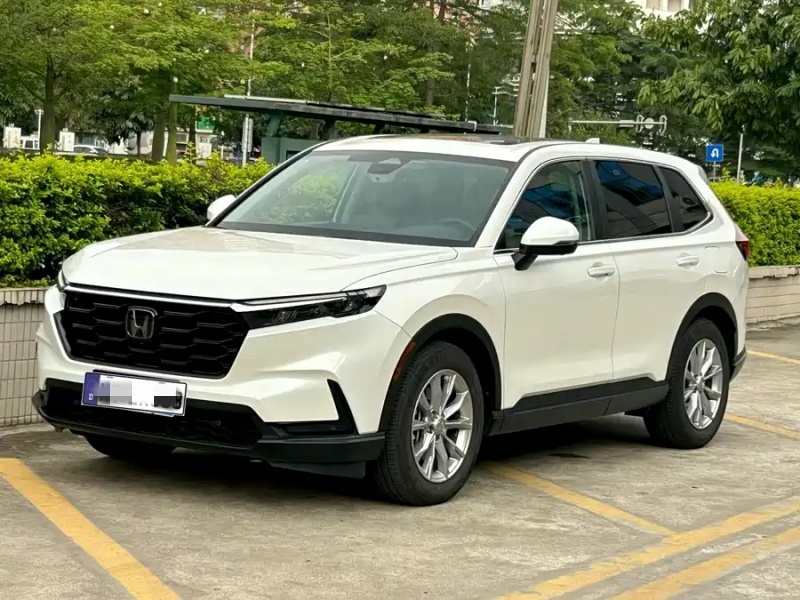
Honda CR-V Hybrid: Generation-selection and reliability searches lead naturally to a focused hybrid-system inspection that separates model reputation from one vehicle's condition. This guide treats CR-V hybrid battery and powertrain condition as a buyer decision supported by evidence rather than a set of general claims.
Start with requirements rather than the listing price: model year, version, operating conditions and an acceptable preparation budget for the Honda CR-V Hybrid. A request through Panda Used Cars should identify one VIN and explicitly include CR-V hybrid battery and powertrain condition.
Quick answer
Inspect a Honda CR-V Hybrid battery and powertrain before export: version identity, scan data, cooling, road-test transitions and service evidence.
- Start with generation and market identity, then evaluate condition.
- Combine scan data, physical inspection and a repeatable road test.
- Retain source diagnostic files instead of accepting only a summary screenshot.
How to scope CR-V hybrid battery and powertrain condition
Separate CR-V hybrid battery and powertrain condition into factory specification, present condition and suitability for the destination. These are different conclusions requiring different evidence.
Compare at least two candidates using the same inspection form. For model context, review Honda CR-V: 2026 honda crv review export from china | Panda Used. A repeatable sequence exposes real differences and prevents attractive photographs from replacing technical evidence.

Step-by-step vehicle checks
1. Identify the exact hybrid generation and market specification by VIN
Start with one observable task: identify the exact hybrid generation and market specification by VIN. Show the VIN, mileage and starting condition in one continuous record before the test begins. For CR-V hybrid battery and powertrain condition, a pass needs an actual result rather than a box marked “OK.” Keep in mind that a reliable model year does not prove one battery is healthy.
2. Scan battery, inverter and powertrain control data before clearing codes
Scan battery, inverter and powertrain control data before clearing codes. Retain the original photographs, video or diagnostic file and tie every item to the VIN. Compare the finding with the factory identity of this vehicle; evidence from a similar car is not acceptable. The practical risk is that dashboard charge level is not a battery-health report.
3. Inspect battery cooling paths and signs of water or collision damage
Inspect battery cooling paths and signs of water or collision damage. The inspector should state the test conditions, show the sequence and separate normal behavior from a repeatable fault. If a defect appears, record the cause, corrective cost and retest criterion before payment. This matters because hybrid specifications differ by generation and market.
4. Road-test engine, motor and regenerative-braking transitions
Finish with “road-test engine, motor and regenerative-braking transitions.” Reconcile the result with history, documents and the other findings for the same VIN. Mark an unavailable or non-repeatable result as “not verified,” not passed. The buying decision must account for the fact that a reliable model year does not prove one battery is healthy.
Red flags and evidence quality
A useful conclusion preserves the source material, date, VIN and measurable result. Treat a claim without an original file, photograph or repeatable test as unverified.
- A reliable model year does not prove one battery is healthy.
- Dashboard charge level is not a battery-health report.
- Hybrid specifications differ by generation and market.
Make the decision and prepare shipment
Separate safety or registration blockers from negotiable defects and cosmetic observations. Close the first group before purchase; document the price allowance, repair owner and retest for every remaining finding.
Before carrier handover, repeat the condition photographs and verify keys, cables, documents, batteries and tires. Continue with the site’s related resources to cover adjacent risks.

Frequently asked questions
How should “identify the exact hybrid generation and market specification by VIN” be documented?
Show the Honda CR-V Hybrid VIN, starting conditions and the complete test without gaps. Preserve measurements or diagnostic files in their original format.
What if “scan battery, inverter and powertrain control data before clearing codes” cannot be verified?
Do not assume it is correct. Record the limitation, price the maximum credible risk and either delay payment or include that exposure in the deal.
When should CR-V hybrid battery and powertrain condition be tested again?
Repeat after repair, code clearing, software updates or extended storage. Use the same conditions so the before-and-after results remain comparable.
What should transfer with the Honda CR-V Hybrid?
Provide the VIN-linked report, photographs, video, diagnostic files, finding list, completed-work evidence, keys and agreed export documents.